
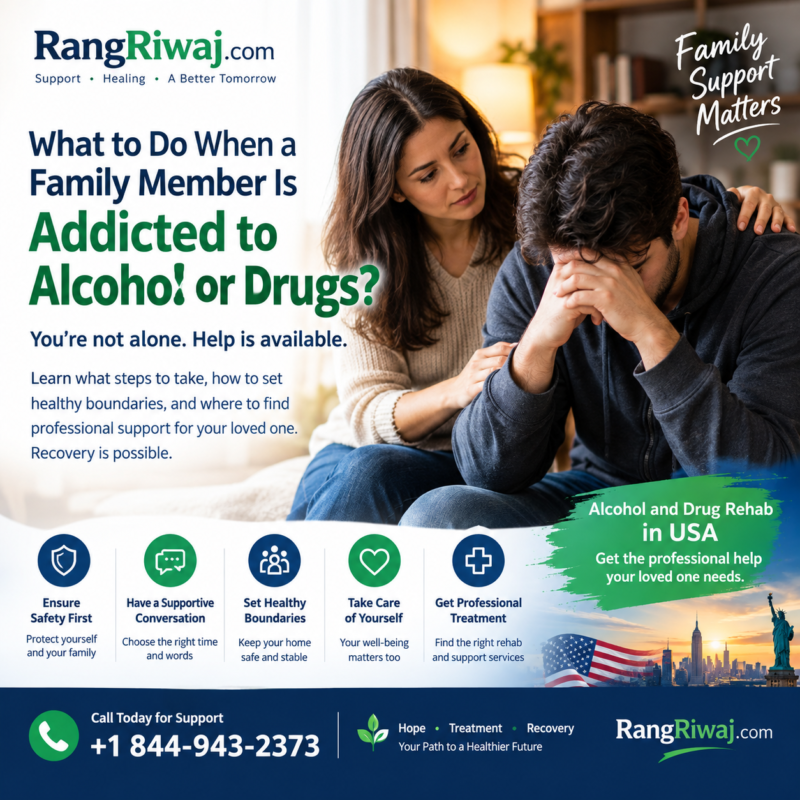
Having a family member who is struggling with alcohol or drug addiction can be extremely difficult. You may feel exhausted, worried, angry, helpless, or unsure about what to do next.
You may have tried talking to them, helping them financially, protecting them from consequences, or encouraging them to stop using substances. Sometimes, despite your best efforts, the situation continues.
If you are asking yourself, “What can I do if someone in my home is addicted to alcohol or drugs and I can no longer cope?”, you are not alone.
Substance use disorders can affect the entire family, not only the person using alcohol or drugs. Family members may experience emotional stress, financial problems, relationship difficulties, and concerns about safety. SAMHSA recommends that families seek support while also taking care of their own physical and emotional well-being.
You Do Not Have to Handle Addiction Alone
One of the most important things to understand is that you cannot solve another person’s addiction by yourself.
You can offer support, encourage treatment, communicate your concerns, and help your loved one find professional resources. However, recovery generally requires the person struggling with substance use to participate in treatment and support.
SAMHSA advises families to approach a loved one with compassion, listen without judgment, and help connect them with appropriate care.
Instead of asking:
“Why can’t you just stop?”
consider saying:
“I am worried about you, and I want to help you find support.”
A calm and supportive conversation may make it easier for your loved one to consider getting help.
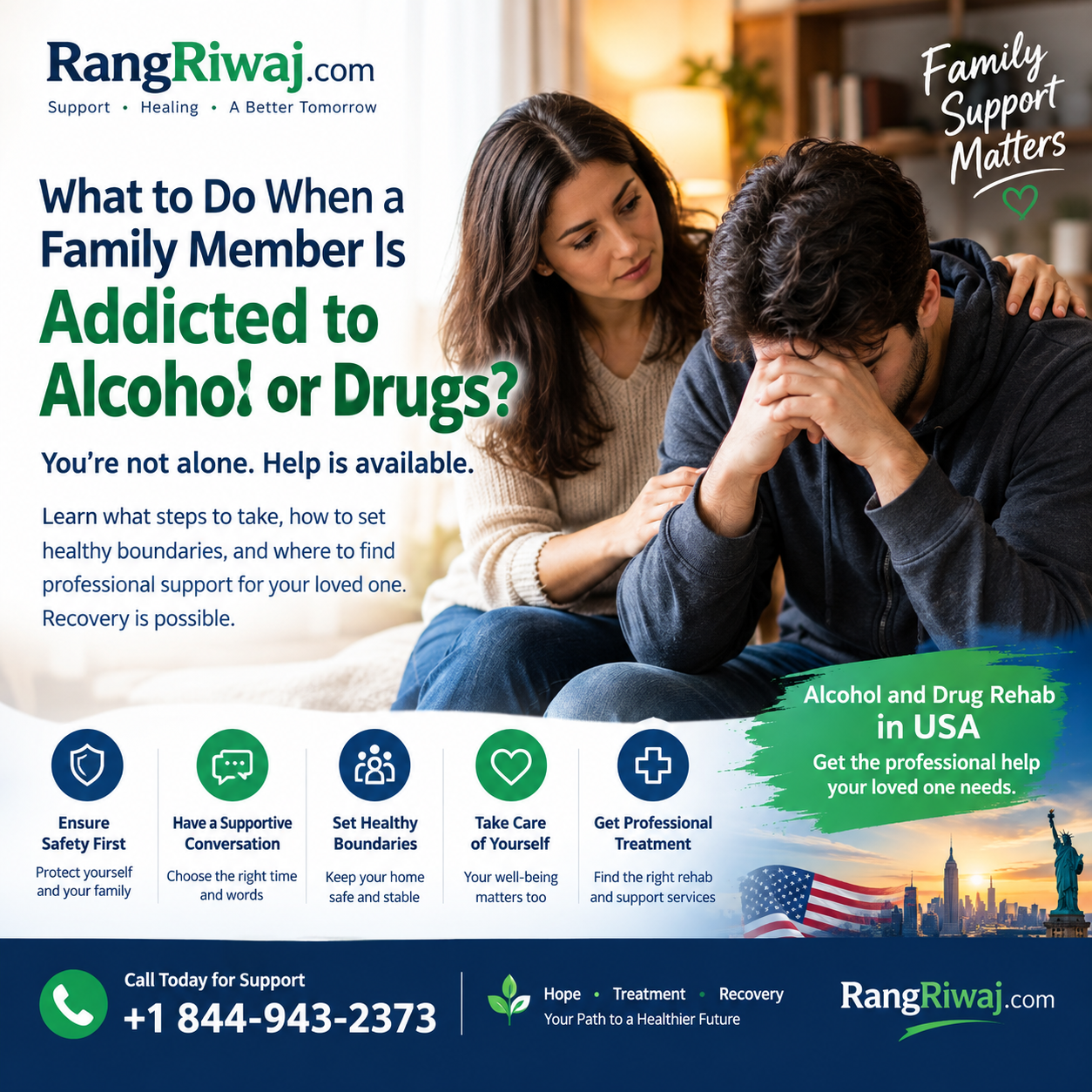
1. Make Safety Your First Priority
Before anything else, consider whether you, your children, or anyone else in the household is in immediate danger.
If the person is intoxicated, aggressive, threatening violence, experiencing a serious medical emergency, or otherwise creating an immediate safety risk, do not put yourself in danger by trying to manage the situation alone.
In the United States, if someone is experiencing a medical emergency or is in immediate danger, call 911 or go to the nearest emergency department.
If someone is experiencing a mental health or substance-use crisis and needs immediate emotional support, 988 is available 24/7 by call or text in the United States. Family members can also contact 988 when they are worried about a loved one.
2. Talk When the Person Is Sober and Calm
Trying to have a serious conversation while someone is intoxicated may make the situation worse.
If possible, choose a time when the person is sober and the environment is calm.
Explain what you have observed without attacking or humiliating them.
For example:
- “I am worried about how alcohol is affecting your life.”
- “I have noticed that your drug use is affecting our family.”
- “I care about you and want to help you find professional support.”
- “We need to make some changes to keep everyone safe.”
SAMHSA recommends supportive conversations and listening without judgment when helping someone who may be dealing with alcohol or drug problems.
3. Set Healthy Boundaries
Supporting someone does not mean allowing destructive or unsafe behavior inside your home.
Healthy boundaries might include:
- Not giving money that may be used to purchase drugs or alcohol.
- Not lying to employers, relatives, or others to cover up their substance use.
- Not accepting violence, threats, or abusive behavior.
- Protecting children from unsafe situations.
- Clearly explaining what behavior is and is not acceptable in your home.
- Getting help when you feel overwhelmed.
Boundaries are not about punishing someone. They can help protect your family while making it clear that professional help is needed.
4. Do Not Ignore Your Own Well-Being
When a loved one is struggling with addiction, family members can become so focused on the addicted person that they forget about themselves.
You may stop sleeping properly, avoid friends, experience constant stress, or feel responsible for everything happening in the household.
Your well-being matters too.
Consider talking with:
- A trusted family member or friend
- A doctor or mental health professional
- A counselor
- A family support group
- A substance-use treatment professional
- A community organization
SAMHSA notes that family therapy and support groups can help families cope with substance-use and mental health challenges, and recommends that caregivers prioritize their own health.
5. Encourage Professional Addiction Treatment
Alcohol and drug addiction can require professional treatment. Depending on the individual’s needs, treatment may involve medical care, counseling, behavioral therapy, medication, residential treatment, outpatient services, or continuing recovery support.
Every person’s situation is different, so a qualified healthcare or addiction-treatment professional can help determine appropriate options.
For people in the United States looking for treatment resources, SAMHSA provides a free and confidential National Helpline at 1-800-662-HELP (4357) and an online treatment locator through FindTreatment.gov.
6. Understand That Recovery Takes Time
Recovery does not always happen in a straight line.
A person may agree to treatment and later struggle again. They may refuse help initially and become willing to seek treatment later.
That does not mean that your efforts are meaningless.
Continue encouraging professional help while maintaining appropriate boundaries and protecting yourself and other family members.
SAMHSA emphasizes that substance-use disorders are treatable and that people can recover, while family support can play an important role.
7. If You Are Completely Exhausted, Ask for Help Too
Sometimes the family member is not ready for treatment, but you are already at your limit.
You do not have to wait until your loved one agrees to treatment before seeking advice.
You can contact a healthcare professional, counselor, support organization, or treatment referral service and explain your situation.
SAMHSA’s National Helpline provides free and confidential information and treatment referrals for people and families dealing with mental health and substance-use disorders. It is available 24 hours a day, 365 days a year.
Alcohol and Drug Rehab in USA: Getting Professional Support
If your family member is struggling with alcohol or drug addiction, professional treatment may provide an important path toward recovery.
Alcohol and drug rehab in the USA can include different levels of care depending on the person’s circumstances. Treatment options may include:
- Alcohol addiction treatment
- Drug addiction treatment
- Residential or inpatient rehabilitation
- Outpatient treatment
- Individual and family counseling
- Behavioral therapy
- Recovery support services
- Aftercare and continuing recovery programs
The appropriate treatment depends on the individual’s substance use, health, safety, and personal circumstances. A qualified treatment professional can help determine what type of care may be appropriate.
If you or someone in your family needs help finding alcohol and drug rehab in the USA, you can also contact our support service at:
Call Today: +1 844-943-2373
You can call +1 844-943-2373 to learn more about available addiction-recovery support and treatment resources.
You do not have to face this situation completely alone. Asking for information is a reasonable first step toward understanding your options.
Final Thoughts
Living with a family member who is struggling with alcohol or drug addiction can be emotionally exhausting. But you do not have to sacrifice your own safety and well-being in an attempt to control someone else’s substance use.
Start with safety. Talk with compassion when the situation is calm. Set healthy boundaries. Seek support for yourself. And encourage professional treatment when appropriate.
If you are looking for alcohol and drug rehab in the USA, professional resources are available.
Call +1 844-943-2373 to learn more about available support and treatment resources.
Important Emergency Information
If someone is experiencing a life-threatening medical emergency or is in immediate danger in the United States, call 911 or go to the nearest emergency department. For immediate crisis support, you can also call or text 988. SAMHSA’s National Helpline is 1-800-662-4357 for free, confidential information and treatment referrals.
This article is for general educational and informational purposes and is not a substitute for medical, psychiatric, or emergency care.
